Projects
A few research directions I have worked on, spanning neural network potentials, interpretable AI, RNA-targeted drug discovery, and AI-accelerated simulation.
RNA–lipid interactions with neural network potentials Current
In the Kulik group at MIT, I combine neural network potentials (NNPs), generative transition state modeling, and enhanced sampling to study RNA–lipid interactions — working toward quantum-accurate, physically grounded models of the rare events that govern how RNA associates with lipid environments.
Thermodynamics-inspired explanations of AI
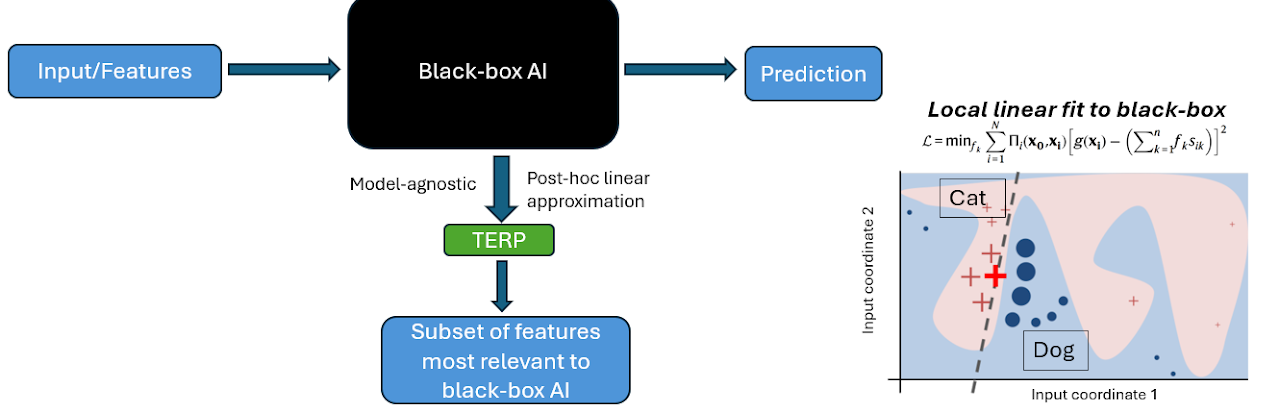
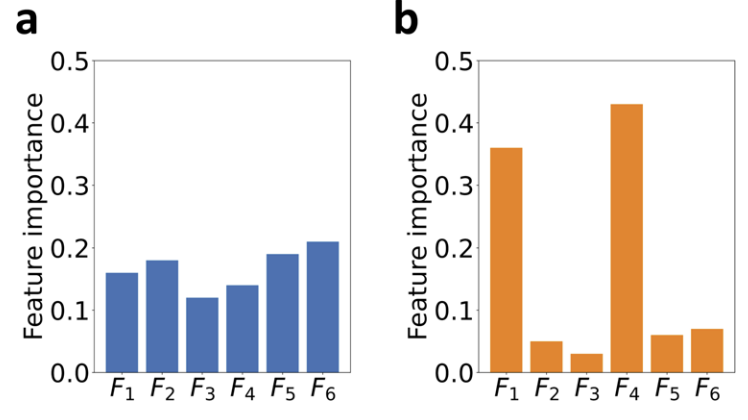
Understanding why deep neural networks make specific predictions is essential for establishing trust. We propose TERP, which explains black-box behavior by fitting local linear models. Because some fitted explanations are far easier for humans to understand than others, we introduce interpretation entropy (S) as a principled measure of human interpretability — showing that model complexity alone is not a good descriptor of it.
AI-accelerated MD for RNA therapeutics
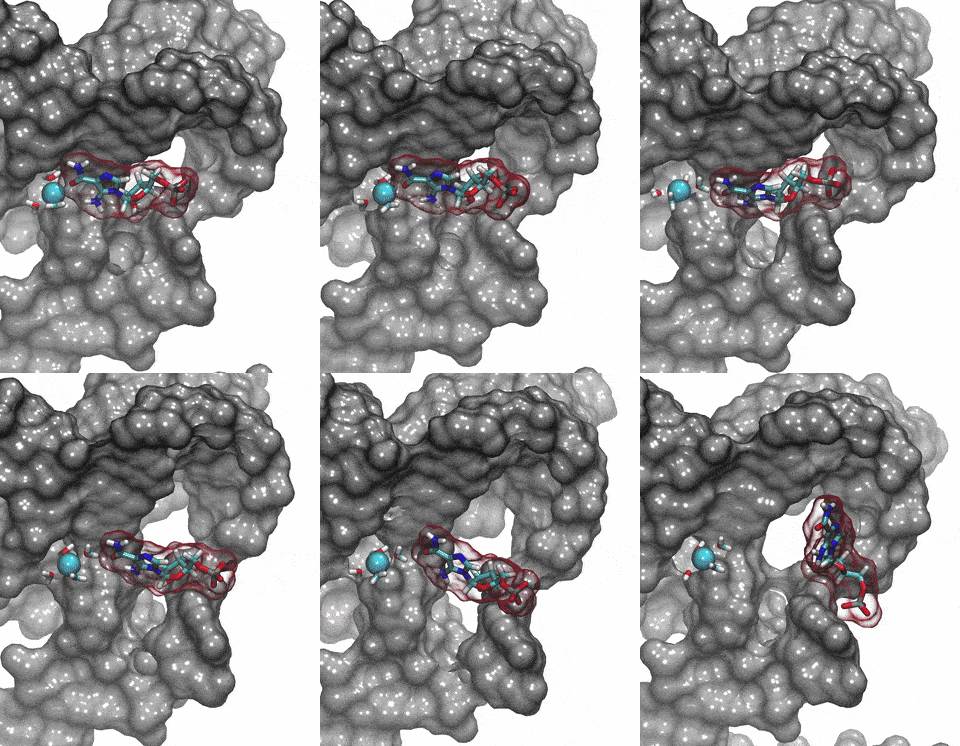
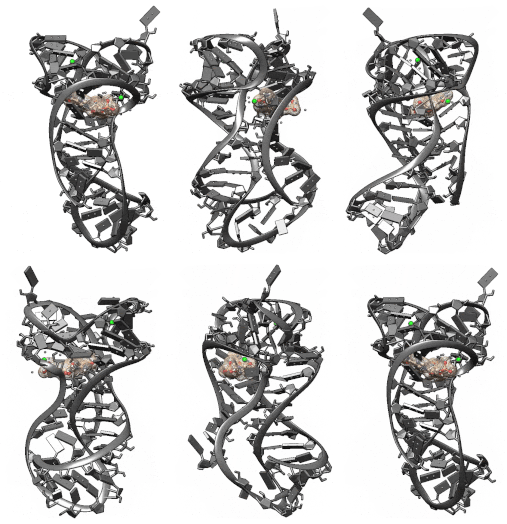
Combining computational and experimental methods, we investigate how small-molecule ligands affect ZTP riboswitch ligand-dissociation kinetics. We identify distinct dissociation mechanisms for different ligand classes and confirm that the ligand on-rate determines efficacy — bridging the disconnect between binding affinity and biological activation.
Accelerating all-atom simulations with AI
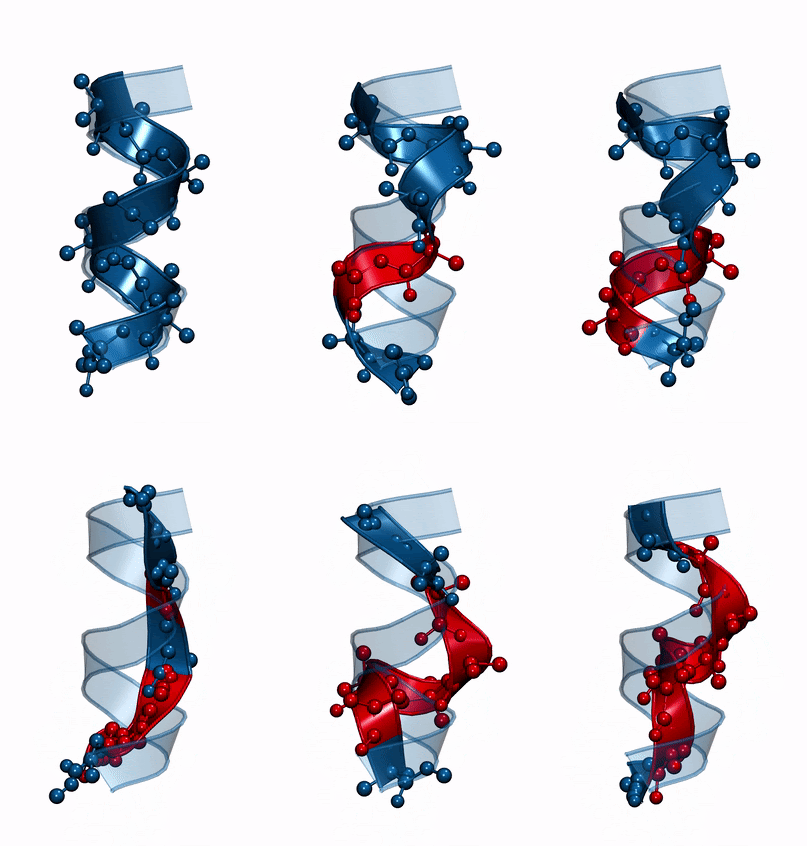
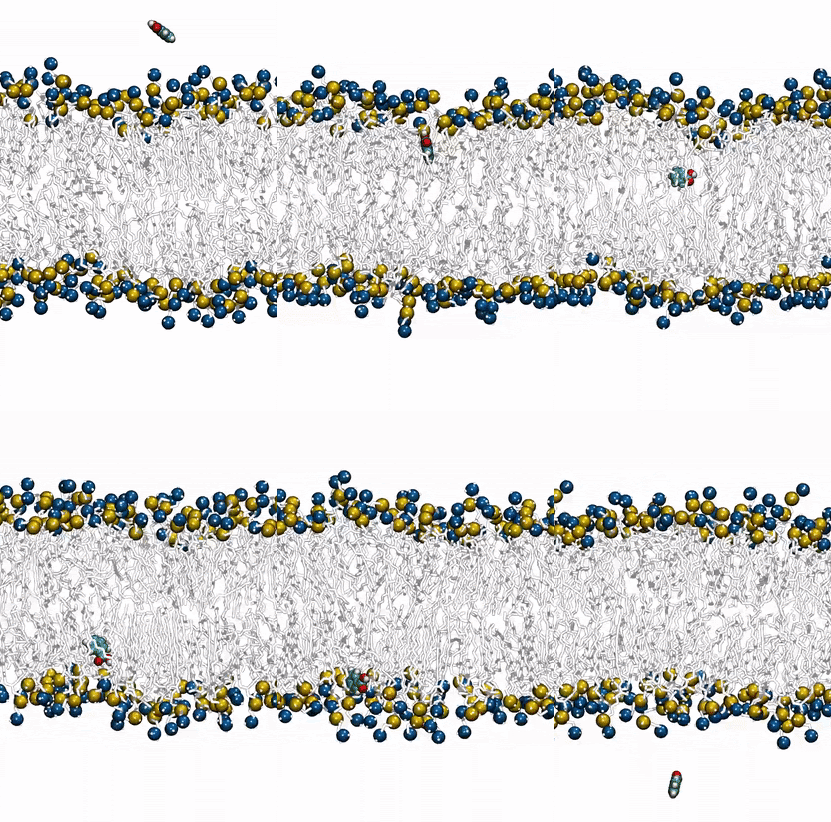
Using the AI-based State Predictive Information Bottleneck (SPIB) to learn reaction coordinates on the fly, we accelerate molecular dynamics for two systems: the helical transitions of the (Aib)9 polypeptide, and the permeation of benzoic acid through a DMPC phospholipid bilayer — gaining mechanistic understanding of both.